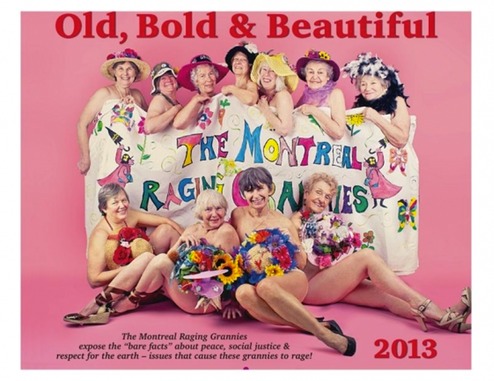
The Raging Grannies emerged in the late 1980s to bring attention to pressing peace, justice, and environmental issues. Their goal was to create a more humane, just and non-violent world for their grandchildren and for all the world's people. As older women, the Granny stereotype was applied to gain access to places where protest is not generally welcomed --meetings with evasive national leaders, at government hearings and contesting greedy corporations. Dressed in outrageous garb, they sing humorous songs and engage in street theatre antics to gain popular and media attention.
To quote a line from one of their songs, "We're just a gaggle of grannies – we don't sit on our fannies." The grannies sing about war, escalating military budgets, nuclear pollution, medicare, landmines, fair trade, climate change, GMO foods, toxic pollutants and war toys. Most "gigs" include suggestions for follow up action -- what people can do and who they can write to.
Click above to learn about the new Old, Bold and Beautiful Raging Grannies Calendar!