Prepared by
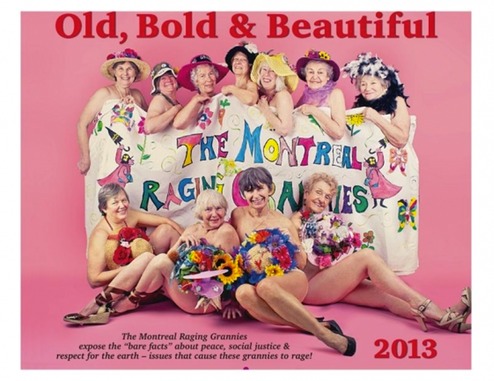
The Montreal Raging Grannies


Guide to planning, producing and performing your own creative actions

Planning
Designing the Action/Performance


Planning:

1. Is there a political target? If so what do they want? What are your goals? What pressure can you bring to bear?

2. Who is your audience? Is it the general public or a particular constituency?

3. Where does your audience gather? Churches, metro/subway stations, public squares, cultural events? Indoors or outdoors?

4. What does your audience care about? Health, environment, human rights, women's issues?

5. What message, style and mode of delivery will be the most effective? Aggressive and challenging or more gentle? Straight or satirical?

6. Are you attempting to nourish and reinforce an audience that agrees with you or are you trying to persuade and educate an audience with more neutral or diverse opinions?

7. Is the action fun? Does it demonstrate real power? Does it raise the morale of your own people? Is it likely to get media attention?

*Note: Humour is a shield. You can say things with humour you can't without. Also, be very clear about who your audience is. Different kinds of action have different kinds of audiences. If you are demonstrating outside a corporate headquarters or protesting outside the office of an elected official, then you have to consider the two audiences: the political target and the onlookers and observers via the media, whose support you want to gain.


Designing the Action/Performance:

1. Be creative. Remember an action is a unique encounter between your group's style and imagination and an issue and audience. Creative approaches often draw from a common pool of possibilities: humour, parody, surprise, hidden identity.

2. Less is more. Figure out the ONE thing you need to say, then say it well and repeat it over and over. (Save the rest for another time).

3. Keep text to a minimum. Too much text without interruption can be too confusing or can require too much effort on the part of the viewer. Whatever it is - performance, pamphlet or vigil - make it visual or physical or musical. Image is everything in today´s world. Image is most important outdoors where spoken words are often lost in other noise.

4. Maintain a consistent look. All parts of the action should present a single theme in a consistent way. The design of any slogans, phrases, flyer graphics, banners, props, press releases should all be coordinated to develop a single cohesive message and visual identity.

5. Use powerful metaphors. Use a fashion show to expose sweatshops. Portray economy as a game with unfair rules. Use metaphors and motifs that are common in the culture.

6. Don't laundry list. Don't feel you have to mention every identity constituency in each and every performance. You are telling a story, not an agenda. Don´t feel compelled to mention every item on the progressive wish list. You are sharing a vision, not a platform.

7. Offer vision, not complaints. Convey hope and offer doable alternatives and solutions. When appropriate, offer specific and tangible proposals for change. Think of yourself more as a messenger of hope than a conveyor of information.

8. Don't preach. Everyone hates being preached at. Try to embed the important information right in the performance. Avoid lecturing and speechifying words. Try to SHOW more and TELL less - the audience will teach themselves.

9. Make it subtle or make it clear? You can choose to use melodrama to bluntly pit good against evil. Or you can take a more subtle approach. It all depends on who you are targeting, who your audience is, etc.

10. Balance art and message. Art wants to explore the deep questions. The politics insists on a clear direction and message. The highest challenge for the cultural activist is to create a powerful work of art that still conveys a clear political message. To do this you need to get past the surface conversation into the deeper human concerns that lie at the heart of the issue.

11. Use humour to undermine authority. Imagine a labour action where the corporate target has to arrest Barney or escort Santa off the property. Authority needs respect and an aura of formality and seriousness to maintain its power over people. Humour can disrupt this aura and undermine a target's authority.

12. Shock carefully and constructively. Carrying confrontational art directly into people's everyday spaces is a powerful but unilateral tactic, requiring extra responsibility and discipline. Respect your audience. Don't shock for the sake of it. Know why you are doing it.

13. Expand your venues. Perform in places you might not think of: fairs, malls, sporting events, conferences, formal government hearings.

14. Use music (songs). Almost any action is enhanced by music. Singing is disarming and adds life and energy to any event, setting it apart from its surroundings and helps draw a crowd. Drumming, clanging, rhythmic chanting etc., are all easy and effective.

15. Have fun. Take your issue seriously but don't take yourselves seriously. Keep focussed on the message you want to convey but remember people more often hear the message when they are laughing and enjoying the action.

16. Be prepared and informed. Know your issue and why you are taking action, otherwise you can look ridiculous. Have a spokesperson who is well-informed and articulate ready to talk to the media.

BACK TO TOP
<<Previous Next>>